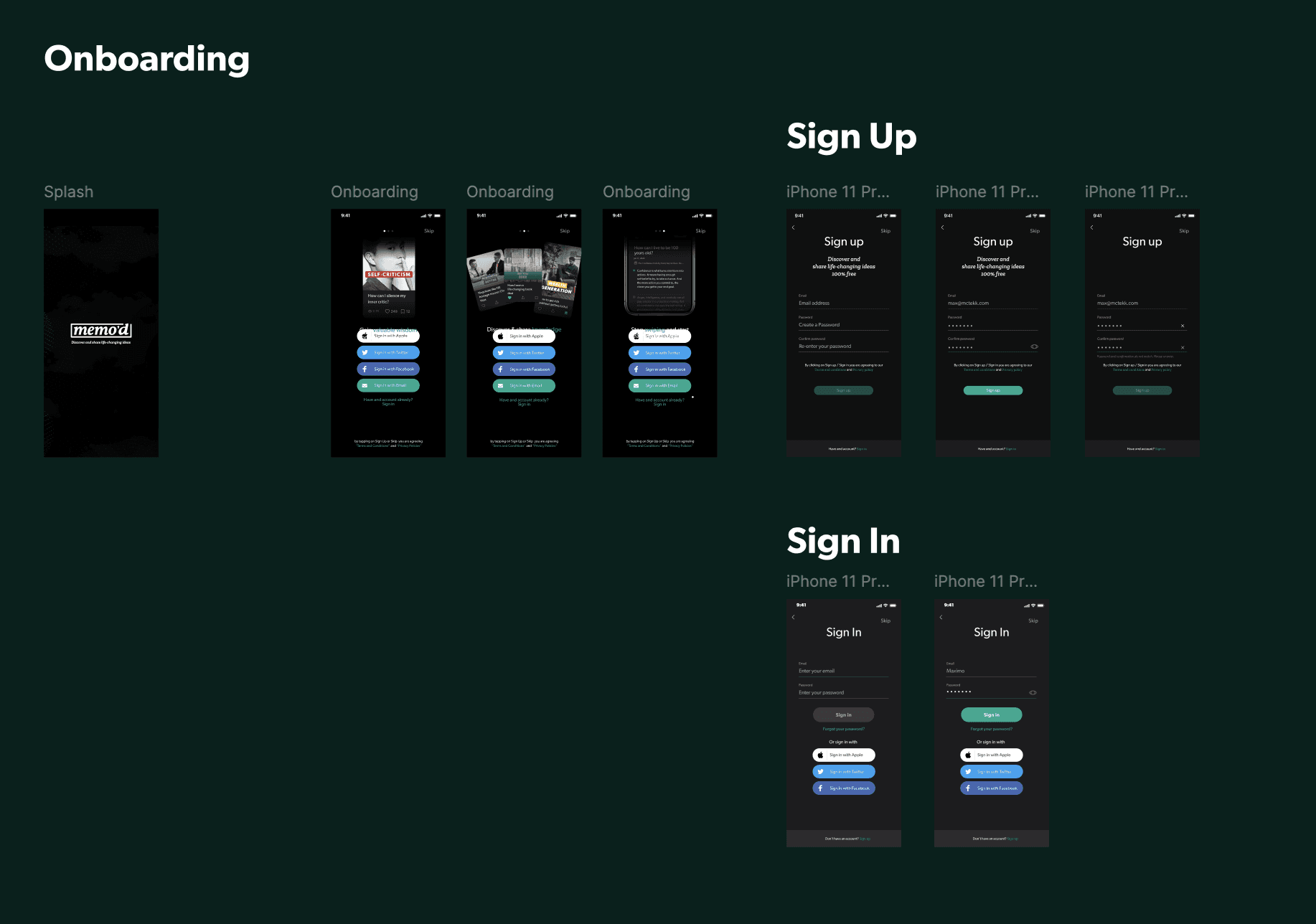
Memo'd is a note-sharing app where users discover inspiration and ideas shared by a community of creators. Despite a compelling core product, the signup flow was creating friction before new users ever experienced its value. This project was a full revamp of the onboarding experience across Web and iOS.
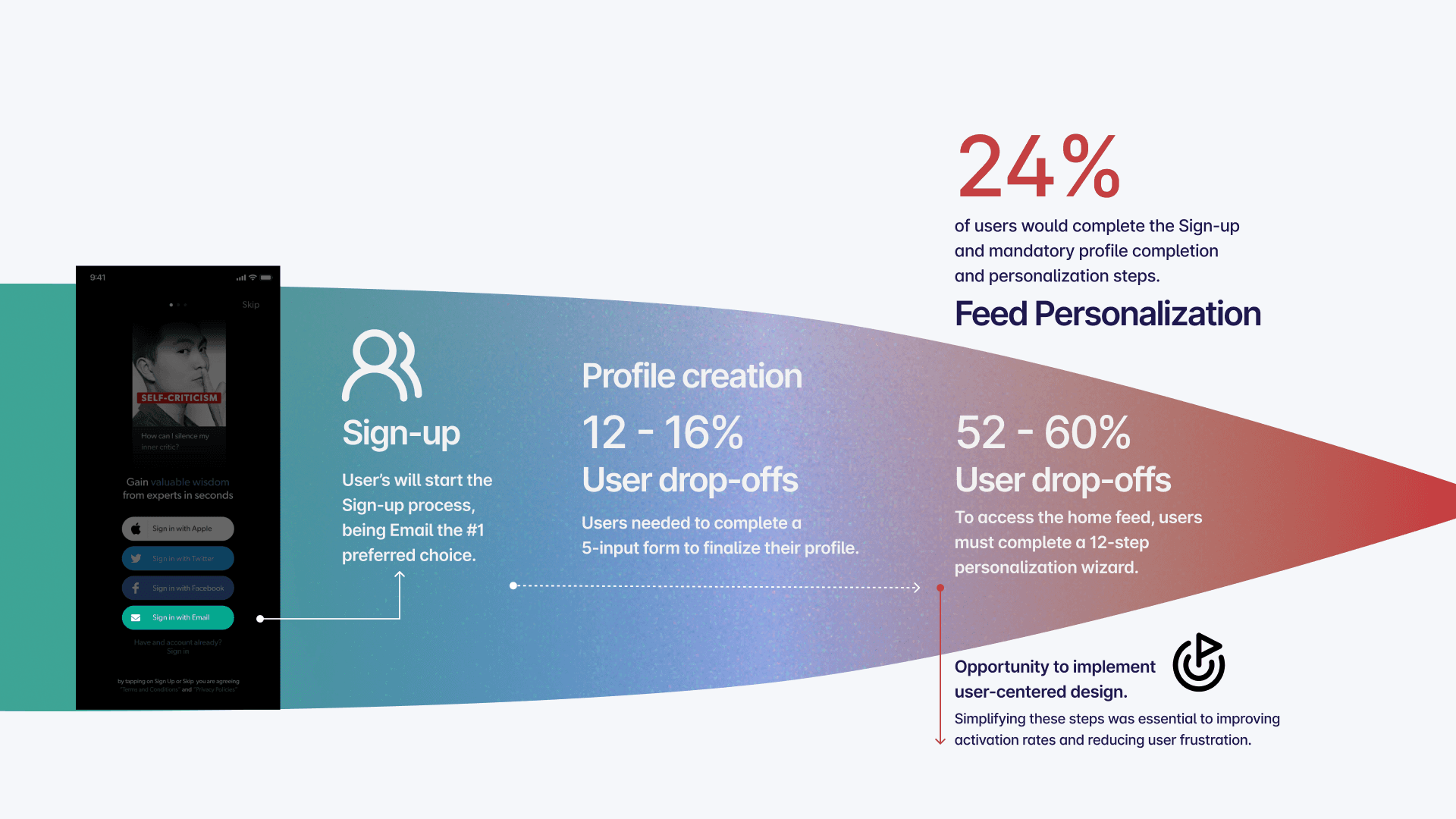
52–60% drop-off before first value
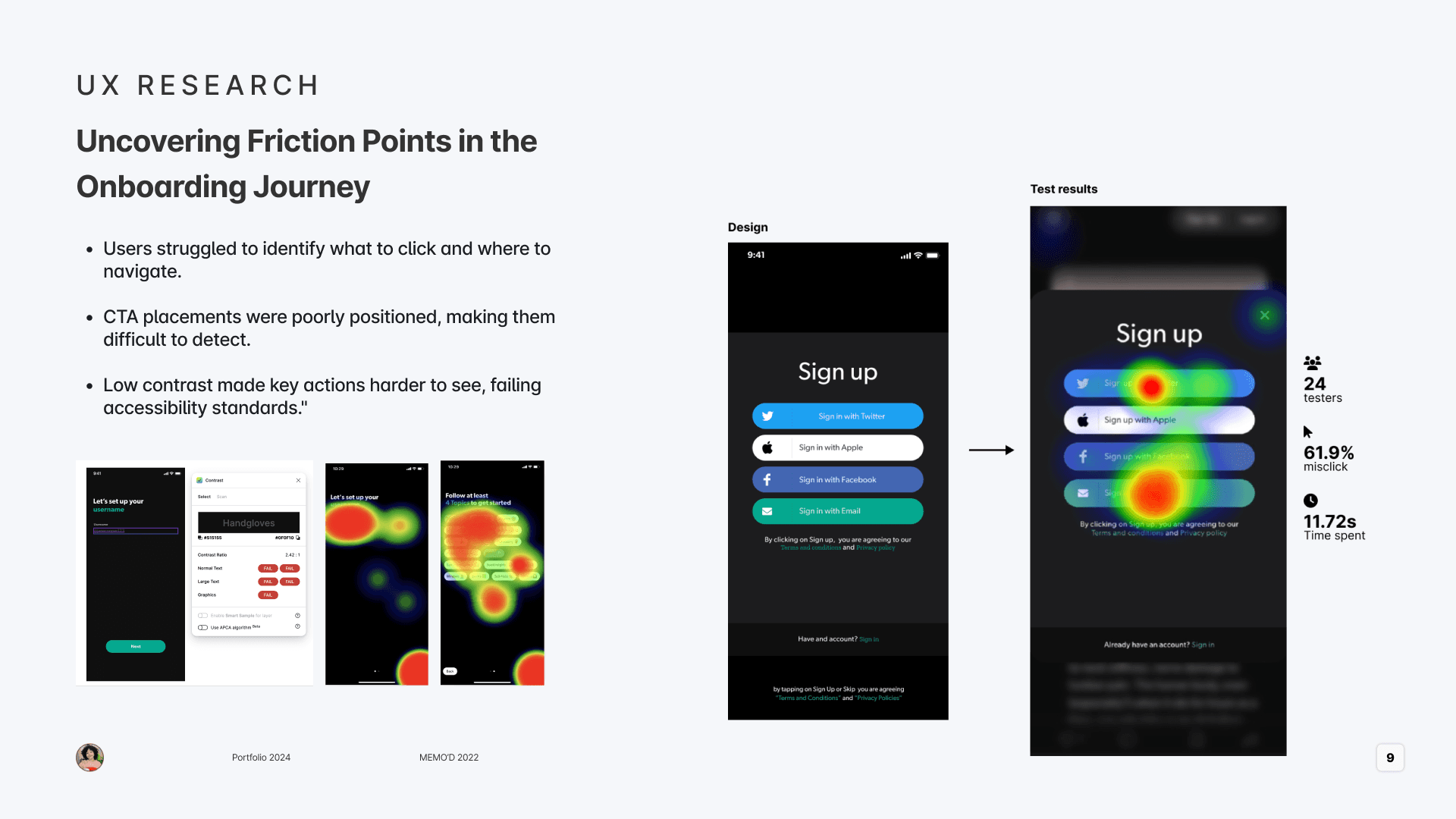
The sign-up flow was losing more than half of new users before they ever saw what Memo'd had to offer. The friction wasn't just visual — it was structural: poor CTA hierarchy, confusing navigation, accessibility failures, and unnecessary steps all stacked on top of each other. I set out to untangle every layer of that friction.
Research and diagnosis
Conducted remote usability testing through Maze with 24 participants to map friction points in detail. Ran Design Thinking sessions for empathy and focus. Used Event Storming and usability audits for clarity, and SCAMPER exercises to cut unnecessary steps. Designed high-fidelity screens and collaborated closely with the UXUI designer on visual execution.
+22% task success rate
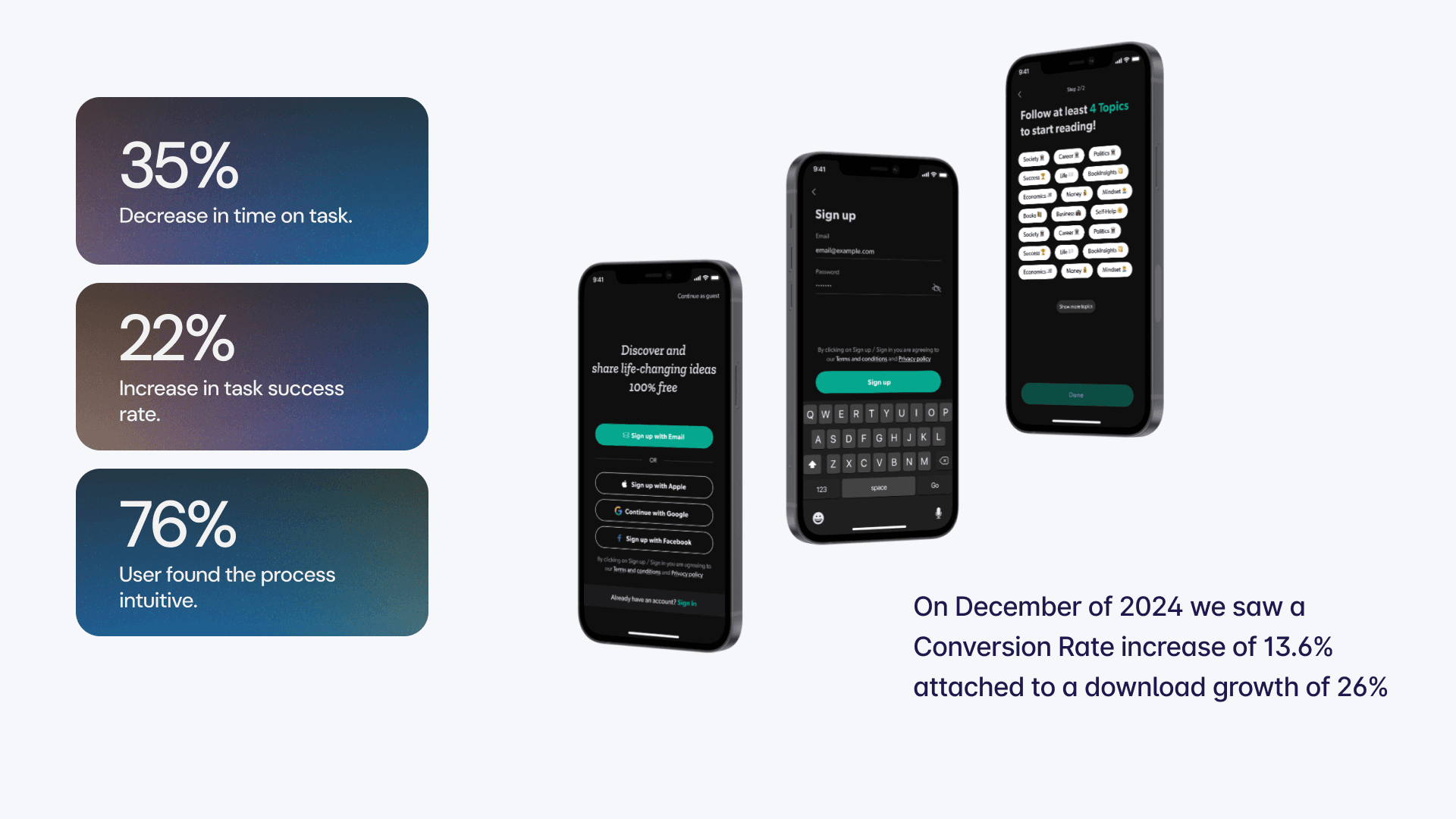
35% decrease in time on task. 22% increase in task success rate. 76% of users rated the new flow as intuitive. The redesigned signup was fast-tracked to launch based on consistently positive usability test results across both rounds of testing.
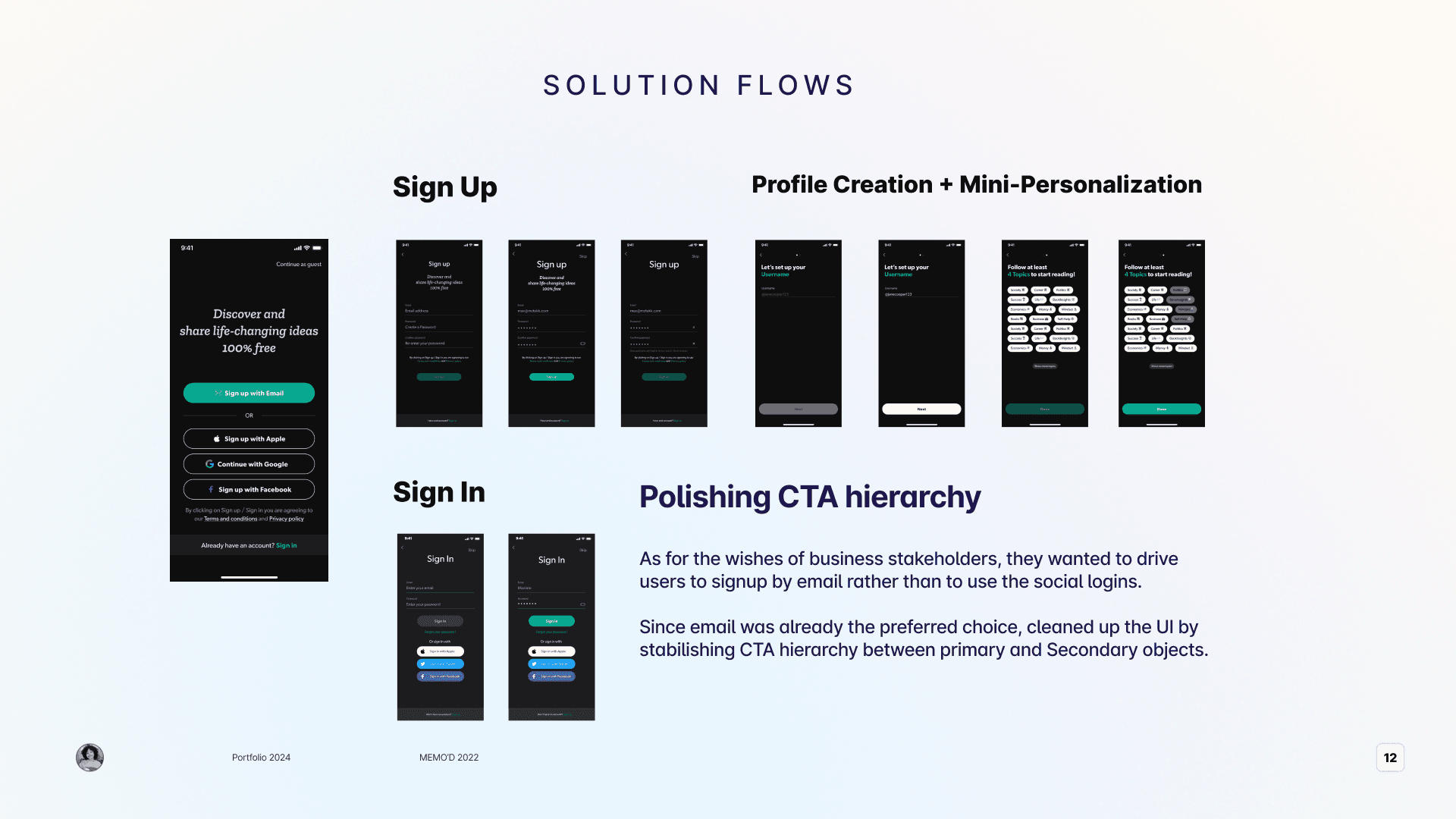
Start-up products offer uniquely compacted challenges that feel impossible until you untangle them with care and empathy. I chose the signup section deliberately — it was the most viable, desirable point of leverage. Influencing design decisions under stakeholder pressure was difficult, but it built my resilience and sharpened my ability to articulate design value through data rather than opinion.
Onboarding design is really trust design. Every step is asking the user to commit a little more — and the job of the designer is to make each commitment feel worth it. The most impactful change in this project wasn't visual: it was structural. Moving value demonstration before data collection shifted the entire dynamic of the flow. If I were to take this further, I'd design a personalized onboarding path based on creator type — readers, writers, and visual creators each have different reasons to be on Memo'd. Surfacing relevant content for each on day one would dramatically increase the chance of that first meaningful moment — the moment a new user thinks: this is for me.